What specifications determine the price of modified cassava starch?
In the agricultural import and export market, especially for modified tapioca starch, the DS (Degree of Substitution) index is not only a technical parameter but also a variable that directly determines the product's price.
Reagent Costs
This is the most obvious physical factor affecting price. To achieve a higher DS (Density Factor), the plant must use a larger amount of modifying chemicals per unit of raw starch.
Proportionality: As the DS requirement increases (for example, from 0.02 to 0.09 for the Acetyl group in E1422), the amount of reacting agent (such as Acetic Anhydride) needed will increase exponentially to ensure reaction efficiency in an alkaline environment.
Additional Chemicals: High DS often necessitates the use of additional catalysts and pH regulators to control the reaction, increasing conversion costs.
Reaction Time and Equipment Efficiency
The DS cannot increase instantaneously. To ensure that functional groups are uniformly attached to the glucose molecule:
Longer production cycle: To achieve high and stable DS (Density Factor), the retention time in the reaction vessel must be extended. This reduces the actual capacity of the plant (instead of running 4 batches/day, only 2-3 batches are produced).
Energy costs: The longer the stirring and temperature maintenance time for the reaction, the higher the electricity and steam costs, driving up the unit cost.
Washing and Purification Process (Purification Standards)
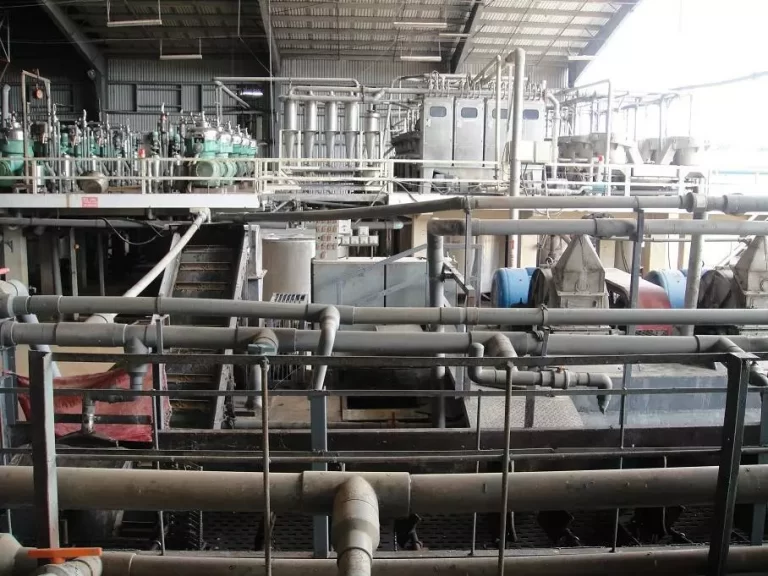
Products with a high DS often have a larger amount of residual chemical by-products (salts, free acids).
Food standards: To obtain E1422 certification for export to the EU or Japan, modified starch must be washed through a centrifugal system multiple times to remove impurities.
Material Loss: The more thorough the washing process to ensure food safety (when DS is high), the greater the loss of fine starch, increasing the cost of goods sold (COGS).
Application Value and Use Value
The price of modified starch is also determined by the solution value it provides:
Low DS: Usually common starches (Commodity grade), competitive on price, low profit margin.
High & Stable DS: This is the high-tech segment (Specialty grade). Superior acid resistance, heat resistance, and freezing resistance help food manufacturers save costs on other expensive additives (such as reducing the amount of eggs in mayonnaise or reducing gum stabilizers). Therefore, buyers are willing to pay a Premium price (15% - 30% higher) for products with accurate DS.
Productivity Index (DS) | Production Costs | Market Price | Target Customers |
|---|---|---|---|
Low (DS < 0.03) | Low | Inexpensive / Competitive | Paper, textile dyeing, and everyday food industries. |
Medium (DS 0.04 - 0.07) | Medium | Stable | Production of chili sauce, ketchup, and canned foods. |
High (DS 0.08 - 0.1) | High | Expensive / Premium | Frozen foods, premium sauces for export (EU, US), pharmaceuticals. |
Technical Risks and Defective Products
Increasing the DS (Density Factor) carries the risk of breaking down the starch polymer chain (degradation) if temperature and chemical concentrations are not properly controlled. A batch with substandard or unevenly distributed DS will be considered defective or sold off at a low price. To compensate for this risk, factories always add a technical risk fee to the selling price of high DS products.
Conclusion
The DS index is a measure of both input costs and output value. When negotiating prices with factories or international partners, understanding the necessary DS level for a specific application will help you optimize costs: avoid buying products with excessively high DS for your needs, but also avoid choosing low DS products that compromise food quality.
Secure Your Supply with Confidence
We support buyers with stable sourcing by working closely with local partners and managing controlled processing systems to ensure consistent supply.
Contact Us



Phone Number


Zalo