The Role of International Certification Systems in B2B Cooperation in Modified Cassava Starch
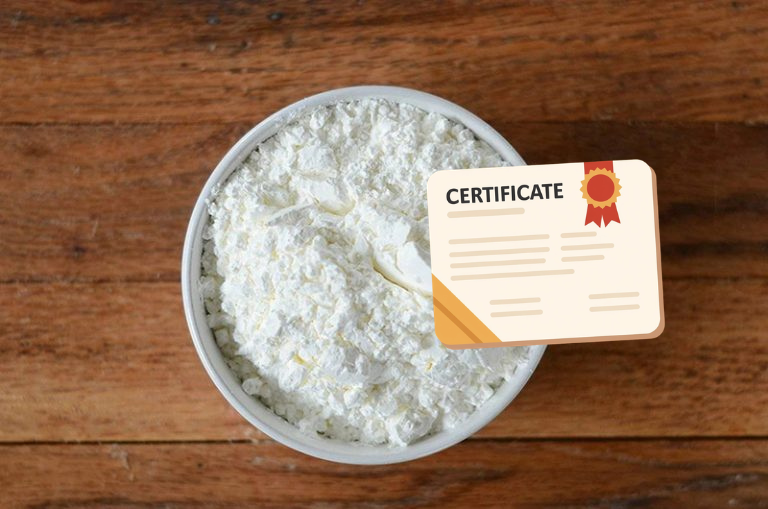
In the food and industrial raw material supply chain, especially for products like modified cassava starch, the decisive factor in B2B cooperation is not only cost but also quality management and risk control capabilities.
From a trade analysis perspective, a company possessing comprehensive international certifications can realize a system of maturity levels and the ability to meet global standards. Certifications such as:
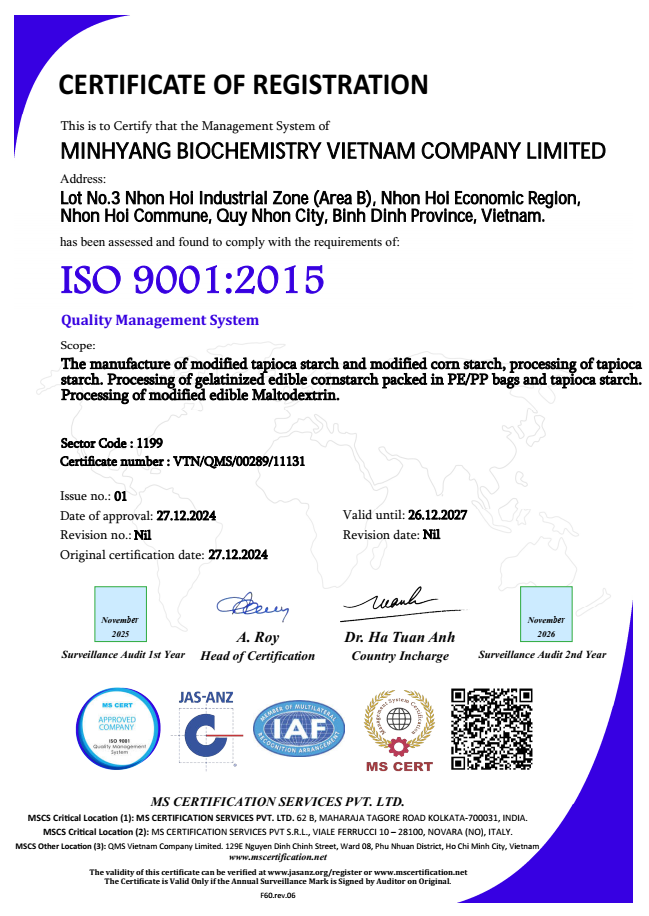
ISO 9001:2015
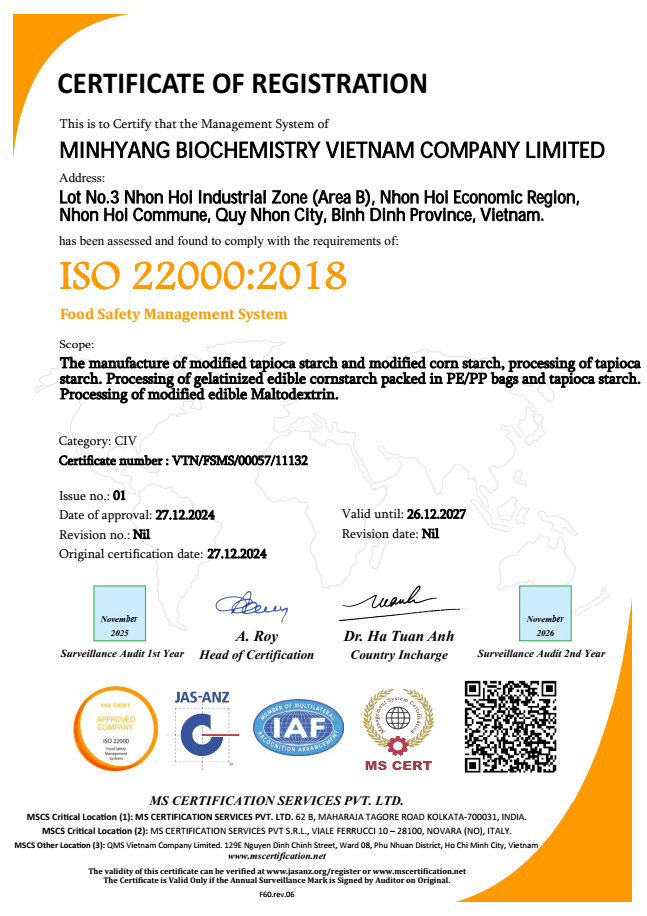
ISO 22000:2018
HACCP Code
JAKIM
MUI
dietary food
These are not simply formal requirements, but important indicators of craftsmanship and export energy.
1. Standardizing Management and Minimizing Quality
ISO 9001:2015 certification demonstrates that the business has built a quality management system based on:
Standardized processes
Document verification
Continuous improvement of mechanisms
Periodic content evaluation
In a B2B environment, this helps:
Reduce discrepancies between products
Maintain product consistency
Improve contract fulfillment
For international buyers, this is a factor in minimizing operational risks in the supply chain.
2. Controlling the entire product according to international standards
Modified cassava starch is often used in modification processes, therefore, a comprehensive product control system is required.
The presence of ISO 22000:2018 and HACCP Codex is found in:
Declaration of a hazard analysis system
Control points to be monitored
A traceability mechanism
Clearly defined process handling procedures
From a commercial perspective, this reduces:
The risk of product recalls
The risk of handling at the point of entry
Providing a potentially disrupted supply chain
3. Expanding access to Muslim markets
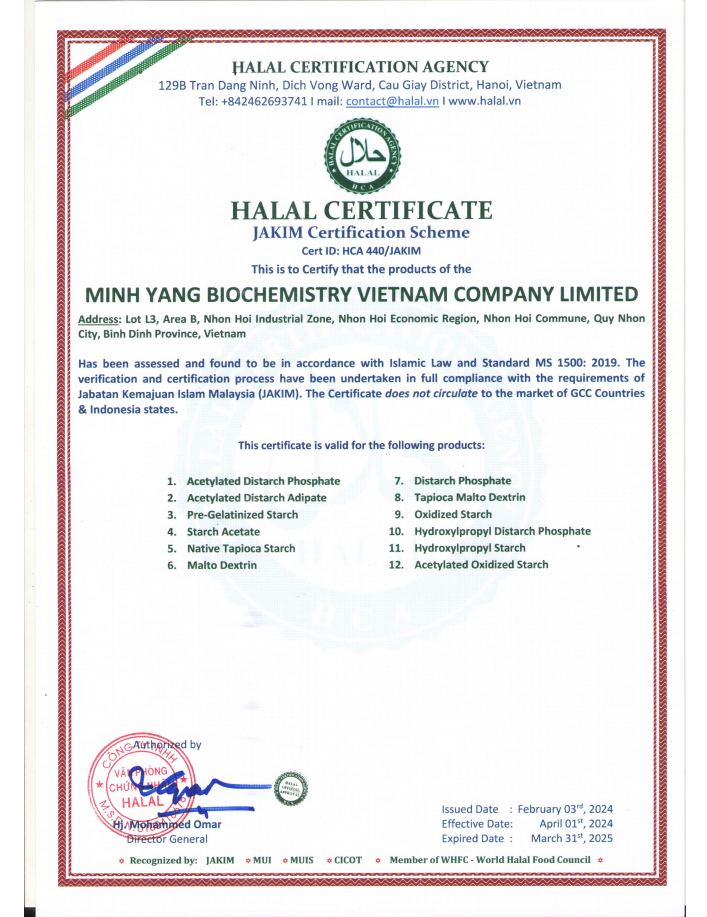
Halal certification from organizations such as:
JAKIM
MUI
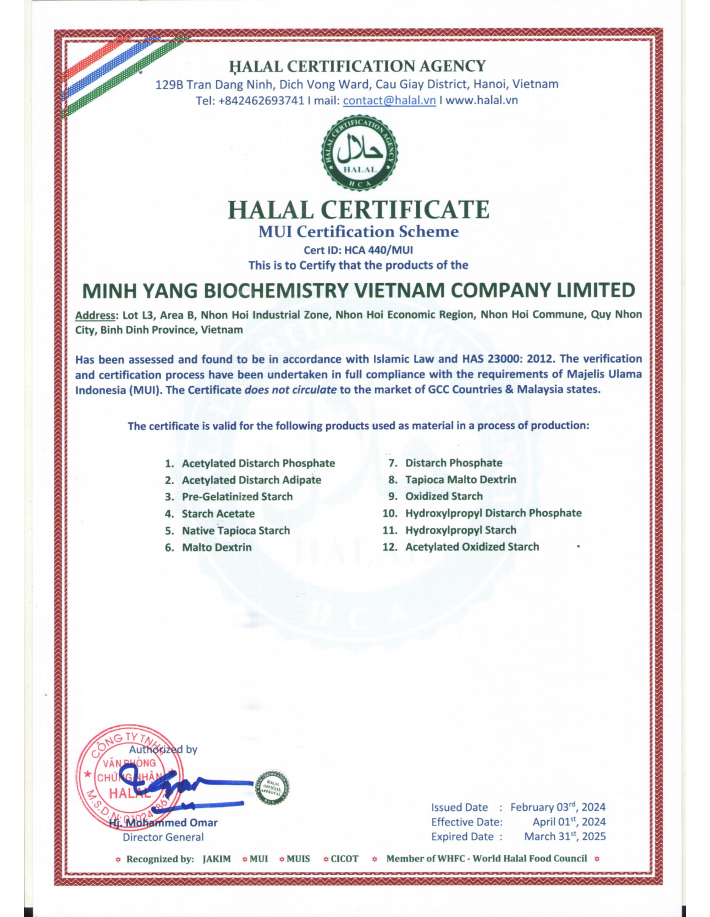
plays a strategic role in international trade.
Halal is now not only a religious requirement but also a mandatory trade condition in many Muslim countries and markets with large Muslim populations.
The machine has been certified by reputable regional organizations, helping to:
Shorten supplier lead times
Enhance information
Improve competitiveness in pricing profiles
4. Enhance the production capacity of specialized dyes
Demonstrate the scalability of Kosher products for applications in:
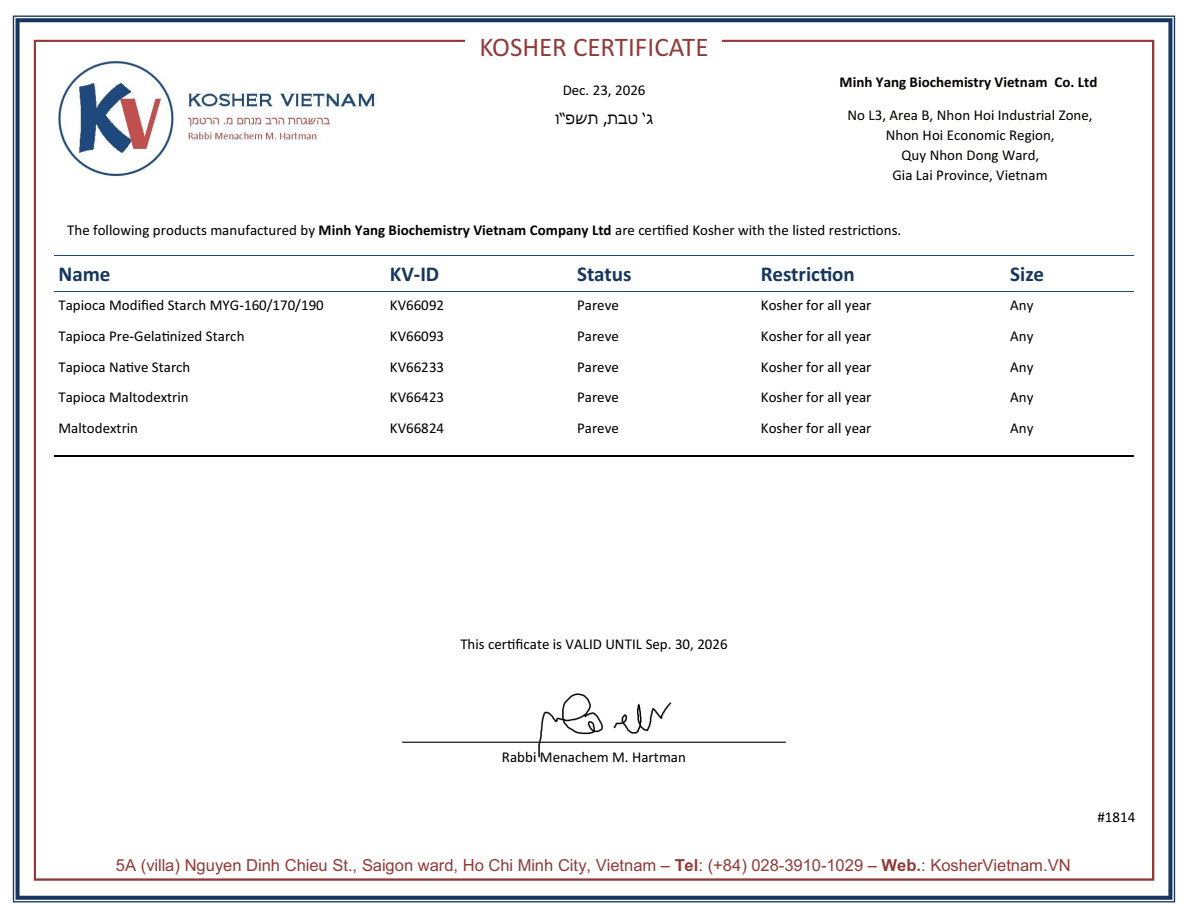
The Do Thai market
Several segments in North America and Europe
Retail chains requiring religious standards
From a commercial perspective, this is a factor that adds value to the product and creates a competitive advantage in high-demand market segments.
5. Reduce assessment costs and increase negotiation efficiency
In a rational B2B operation, customers typically perform:
Supplier evaluation (Supplier assessment)
Competence profile verification
Factory inspection
When a factory has achieved widely recognized international certifications, the evaluation process becomes faster and cheaper for both parties.
This directly impacts:
Decision-making speed
Long-term character integration capability
Level of reliability in trade judgment
6. Indicators of long-term vision and investment capacity
Maintaining an international certification system requires:
Financial investment
Expertise
Definition of operational actions
Regular annual evaluation
Therefore, from an analytical perspective, a business possessing all of these evidence has been found to have:
Commitment to sustainable development
Long-term management capacity
Level of professionalism in operations
These are crucial factors in strategic raw material supply contracts.
Conclusion
f the analysis:In the modified cassava starch industry, international certification systems are not only important but also:
A tool to mitigate trade risks
A factor to enhance competitiveness
A way to expand export market opportunities
An indicator of reliability in supply chain applications
Secure Your Supply with Confidence
We support buyers with stable sourcing by working closely with local partners and managing controlled processing systems to ensure consistent supply.
Contact Us



Phone Number


Zalo